There have been two figures who defined the early part of the 20th century. And yet, they stood at two extremes.
If Europe and the world were merely reacting to what Adolf Hitler did on one hand, on the Indian subcontinent, Gandhi stood at the opposite extreme — teaching an often-ignorant nation what it meant to pursue satya and ahimsa.
Hum Kagaz Nahi Dikhayenge
If Varun Grover composed the couplet “Hum kagaz nahi dikhayenge” in 2019, he was merely repeating what Gandhi had said more than a century earlier, in 1906, when he launched his first Satyagraha against registration certificates in South Africa.
Subsequently, it would become the battle cry for every man and woman fighting the state’s monopoly over deciding who gets what rights on land that they have inhabited for generations — sometimes even before the Indian state existed.
While working as a Prime Minister’s Rural Development Fellow, my experience in Naxal-affected areas taught me why Arundhati Roy would call Naxalites “Gandhians with guns” — much to the outrage of many in this country.
Traditionally dwelling in forests, when a tigress gives birth to cubs — or a cheetah needs to be rehabilitated in the neighbourhood of a tribal hamlet — the tribal Indian is told to relocate.
When the tribal protests, the state machinery — a British design — questions the land ownership, asking the poor tribal where his land ownership documents are.
The poor tribal often comes to know of the Indian state when his peaceful village is disturbed by PSU contractors who have been allocated coal blocks from New Delhi — because Delhi cannot live without an air conditioner — and the only places worth digging are where you have dense forests and meek voices.
So, when the tribal protests, fighting for his right to inhabit lands where his forefathers have lived since before the Indian state came into existence, the state sends Armed Police Forces instead — forcing the tribal to turn Naxal, to fight for his jal, jungle, jameen.
Gandhi’s Ideas Were Not All Practical
As India celebrates decades of independence — and Gandhi’s birth anniversary — it is difficult not to miss the blind spots in his idealism.
Gandhi envisioned Indian villages as “little republics” capable of being self-contained and self-governed.
My own stint in rural India taught me that Indian villages were closer to Ambedkar’s “dens of ignorance” than Gandhi’s little republics.
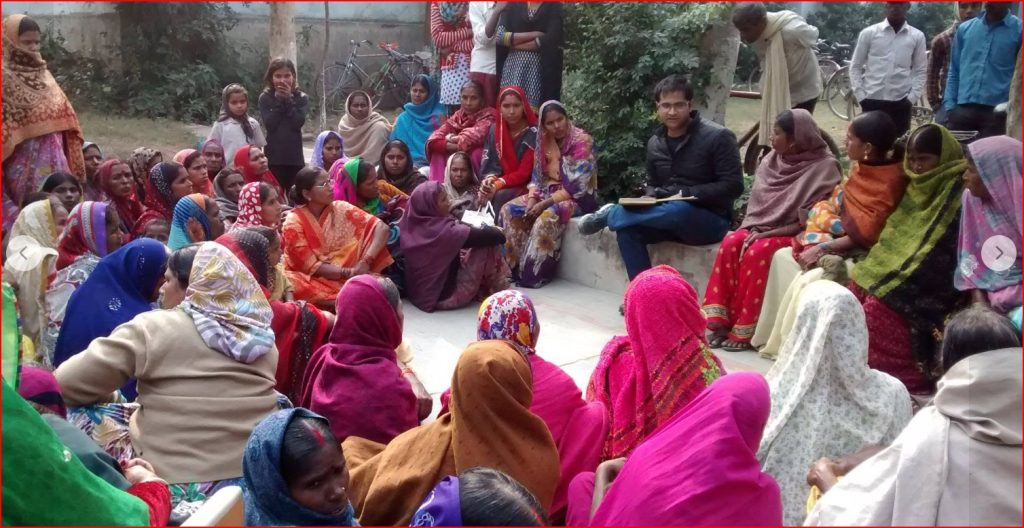
This is me as a young Prime Minister’s Rural Development Fellow. Ten years and 10 kg ago!
Ignoring the Tribal Question
Curious about Gandhi’s views on India’s significant tribal population, I found that the plight of the tribal population was also, in part, a consequence of Gandhi’s politics.
Both Gandhi and Ambedkar championed the cause of the Scheduled Castes — Gandhi even called them “Harijans” — but the tribal cause was largely ignored by both stalwarts.
This is reflected in post-independence politics, where tribal representation in national politics has largely remained ceremonial.
Gandhi Becomes Even More Relevant Today
As we celebrate yet another birth anniversary of Gandhi, let us commit to imbibing the values of satya and ahimsa — more so in this decade of AI, where technological progress has distorted both power and truth.
Gandhi reminds us that any progress without moral restraint is ultimately a regression.
Leave a Reply